Optum Perks: Rx Discount Card
- 4.4
- Rating
- 500.00K
- Installs
- Free
- Price

 Analysis by App-foxy
Prescription prices can change the mood of an ordinary errand very quickly. I opened Optum Perks with that situation in mind: standing in or near a pharmacy, holding a prescription, and wanting to know whether there is a cheaper way to pay before completing the purchase. This is a free medical app from Optum Inc. that focuses on drug coupons for local pharmacies, rather than replacing a doctor, pharmacist, insurance plan, or prescription-management service.
My overall impression is that it is most useful as a quick price-checking companion. It can help when the cash price feels unexpectedly high, when insurance is not covering a medicine as expected, or when you simply want another option to compare. The important qualification is that the app’s usefulness depends heavily on the moment you use it. A strong internet connection can make the search feel practical; a weak connection can turn the same task into an awkward pause at the counter.
How Optum Perks Fits Into a Real Pharmacy Trip
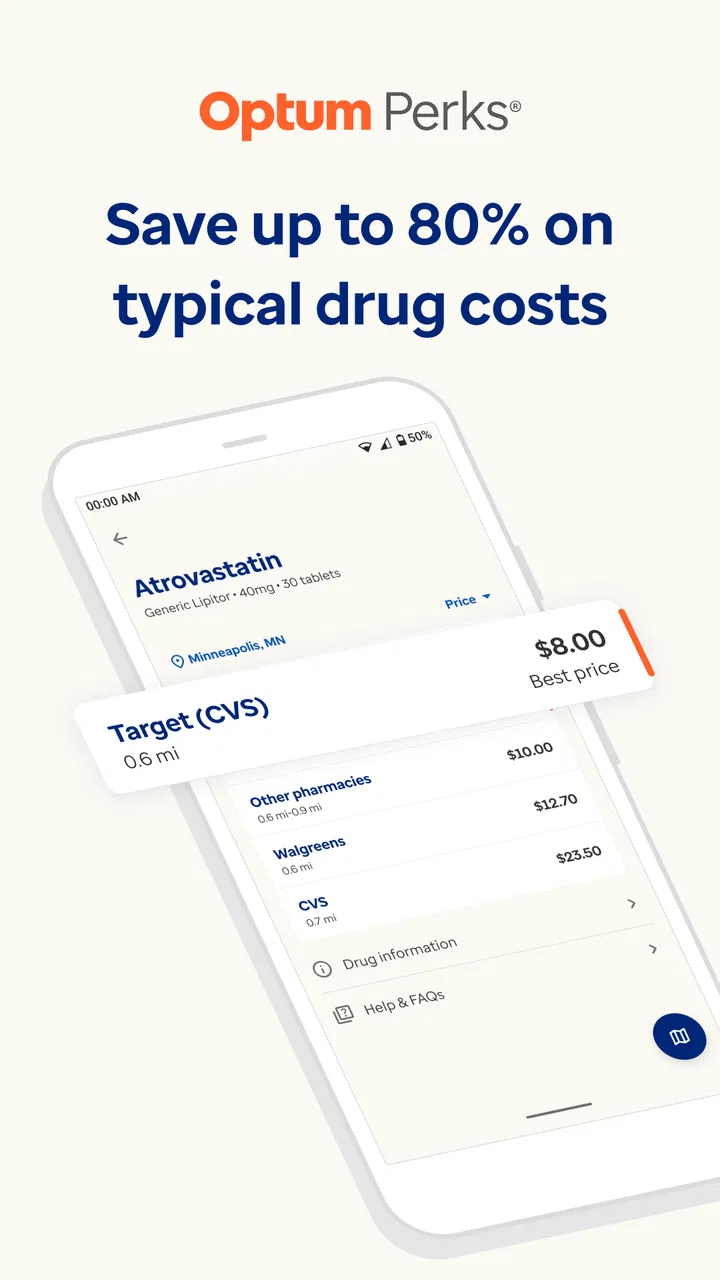
The basic idea is straightforward: search for a prescription medicine, look for a coupon, and use the available information when speaking with a participating local pharmacy. I found the concept easier to understand than many broader health apps because it has a narrow purpose. You are not asked to build a complete medical profile or track symptoms before getting to the part that matters financially.
You May Also Like

 Blood Strike: 2.5 Anniversary
Blood Strike’s Loadouts Turn Every Drop Into a Tactical Gamble
A close look at Blood Strike’s custom loadouts: how fast access to signature weapons reshapes its battle royale rhythm, rewards preparation, and narrows the gap between fights.

 Pandora - Music & Podcasts
Pandora’s Music Is Easy to Start, but Harder to Recover
Pandora’s strength is its low-effort path from a seed to a station. Its weak spot is how much confidence it asks you to place in connection, setup, and quiet recovery.

 8 Ball Pool
 Is Built on Rivalries, Rematches, and Routine
A close look at the rivalries, rematches, shared routines, and unanswered safety questions that turn a quick pool match into a persistent mobile community.

 Samsung Music
’s Quiet Strength Is Playing What You Already Own
Its reach comes less from spectacle than from dependable access to a personal library. That simplicity is both the app’s strongest retention engine and its ceiling.

 AccuWeather: Weather Radar
AccuWeather Review: A Quick, Clear Forecast for Everyday Decisions
For everyday plans, the best forecast is the one you can understand quickly. AccuWeather makes rain timing, radar, and local conditions easy to act on, with a few trade-offs.

 Hill Climb Racing
Why Hill Climb Racing Still Turns Crashes Into One More Run
A tiny car, a bumpy hill and one more upgrade: Hill Climb Racing keeps resurfacing because its simple chaos makes every near-miss feel personal.
More From Our News Desk



That narrow focus is also the first useful distinction. A pharmacy’s normal price, an insurance copay, a manufacturer offer, and a discount-card price are not necessarily the same thing. I would treat the result as a comparison point, not as a guaranteed final bill. The pharmacist still has to process the prescription and confirm what applies to that purchase.
For someone who already knows the medication name and strength, the app can be a convenient starting point. For someone who only remembers a pill’s color or a partial name, it is less suitable. A wrong selection could lead to a misleading comparison, so I would check the prescription label carefully before relying on any result.
The moments when connectivity matters most
The app’s central task involves retrieving current-looking coupon and pharmacy information, so the network is part of the experience rather than a background detail. Searching from home on a reliable connection is usually the calmest approach. You have time to enter the medicine accurately, review the result, and decide whether it is worth contacting a pharmacy before you leave.
Using it while already out shopping is more convenient in theory, but the surroundings can work against it. A pharmacy basement, a crowded store, a large medical building, or a parking area with poor reception can make a search slower or less predictable. I would not wait until the last second if the prescription is urgent.
A practical habit is to check the medicine before arriving at the counter. Save or note the relevant coupon details in whatever way feels comfortable, then ask the pharmacist whether the discount can be applied. This reduces the pressure of trying to search, read small details, and explain the result while other customers are waiting.
There is another subtle connectivity issue: a search result is useful only if the pharmacy can act on it at that moment. Even with a good signal, the final transaction may depend on the pharmacy’s own system, the exact prescription, and the way the discount is accepted. I see the app as a tool for starting that conversation, not as a promise that every displayed option will work everywhere.
Using it in everyday mobile situations
Optum Perks makes the most sense on a phone because the problem itself is mobile. I can imagine using it after receiving a new prescription at a clinic, while comparing nearby pharmacies, or after discovering that an expected insurance price is higher than planned. The small-screen format is helpful when the goal is a quick check rather than a long research session.
One realistic scenario is a person leaving an appointment with a prescription and heading to a pharmacy near work. Before joining the queue, they search the medicine, review the available coupon information, and ask whether the pharmacy accepts that option. If the answer is no, they can compare another nearby location before spending time waiting. That workflow is more sensible than assuming the first price is the only price.
Another useful situation involves a recurring prescription. I would check the price before a refill rather than assuming the previous cost will remain unchanged. This does not mean the app should replace a conversation with the pharmacist or an insurance review. It simply gives me a reason to ask better questions: Is the cash price lower? Is the coupon applicable to this prescription? Would insurance be better in this case?
The app is also relevant for people who do not have prescription coverage, but I would not limit its value to that group. Insured users can still encounter deductibles, unexpected copays, coverage exclusions, or prices that feel out of proportion to the medicine. The trade-off is that a discount route may not combine with insurance, so the cheapest-looking option is not automatically the correct one.
Older users or anyone uncomfortable with mobile searches may need help entering the medication and interpreting the result. The app can support a family member who is comparing costs, but the person helping should verify the exact prescription rather than selecting a similarly named product. Convenience should never outrun accuracy in a medical setting.
What I would check before showing a coupon
The most important step is matching the search to the prescription. I would confirm the medicine name, strength, form, and quantity. A tablet, capsule, liquid, extended-release version, or different strength can produce a different price. This is one of the less obvious ways a discount search can go wrong: the app may be working correctly while the user is comparing the wrong version.
I would also read the pharmacy information instead of stopping at the headline amount. The relevant question is not simply “What is the lowest number I see?” It is “Can this exact prescription be filled at this location under these terms?” Asking that question at the counter prevents a coupon from becoming a source of confusion.
Another useful habit is to compare the coupon route with the price already available through insurance. A discount card may be valuable when insurance is unavailable or expensive, but it may be less helpful when the prescription is covered well. I would ask the pharmacist to compare both routes before choosing, because the app alone cannot make that personal coverage decision for me.
For a family managing several medicines, I would handle one prescription at a time and keep the details separate. Mixing up names or strengths is easy when several searches are performed quickly. A simple note with the medicine name and the pharmacy being considered can make the process clearer, especially when a caregiver is coordinating purchases for someone else.
Where the experience can break down
The obvious failure point is a weak or unavailable connection during a search. Because the app’s value comes from finding current coupon and pharmacy information, I would not assume that a previously viewed result will always be enough for a later transaction. Preparing before leaving home is the safest workflow, particularly for an urgent prescription.
There can also be friction even when the phone is online. Search terms may be ambiguous, a pharmacy may not handle the coupon in the expected way, or the result may not match the final price after the prescription is processed. None of those situations necessarily means the app is useless; they show why the pharmacist remains part of the process.
My recovery approach would be simple. First, recheck the prescription details. Next, confirm the pharmacy and ask whether the coupon is accepted for that exact medicine. If the price still does not make sense, compare it with the insurance price and ask whether another pharmacy or payment route is available. I would not make a medical decision based only on the cheapest displayed amount.
This is also where the app differs from a pharmacy’s own application. A pharmacy app may be better for refills, order status, store communication, or records within that particular chain. Optum Perks is more useful when I want to compare a discount possibility across local options rather than manage an existing pharmacy account. Someone who mainly needs refill reminders or prescription pickup tools may find a dedicated pharmacy app more appropriate.
It also differs from a general insurance app. An insurer’s application can explain coverage, claims, formularies, and plan-specific costs. Optum Perks is better viewed as an additional price-checking route. If I need to understand why a medicine was denied or whether a treatment is covered under my plan, I would go to the insurer or speak with the pharmacist instead.
Privacy, data awareness, and sensible use
Medical searches deserve a little care even when the task seems harmless. I would avoid entering unnecessary personal information and would use the app only for the details needed to identify the prescription and compare the available option. I would also avoid discussing sensitive health information aloud in a crowded pharmacy when a simple, private question to the pharmacist will do.
A discount search can reveal something about a person’s health interests, so I would be deliberate about where and when I use it. A home connection or a trusted mobile connection is preferable to an unfamiliar public network, especially if I am handling other account information on the same device. This is not a reason to avoid the app; it is a reason to treat a medical price search with the same common sense as any other health-related activity.
I would also keep expectations realistic about what the app is for. It can help with affordability, but it does not decide whether a medicine is medically appropriate, whether a dose is correct, or whether a prescription should be changed. Those questions belong with a qualified healthcare professional. The app becomes more useful, not less, when its financial role is kept separate from clinical advice.
Who will benefit, and who should choose something else?
I think the strongest audience is someone who wants a fast way to investigate prescription costs before paying. That includes people without insurance, people facing a surprisingly high copay, caregivers comparing options for a family member, and anyone who wants to ask a pharmacist an informed price question. Its free price makes experimentation easy, and the Everyone content rating keeps it broadly accessible.
The app is less compelling for a person whose prescriptions are consistently inexpensive through insurance and who never compares alternatives. It may also frustrate someone looking for comprehensive medication management, dosage reminders, clinical explanations, telehealth, or direct prescription delivery. Those are different needs, and a discount-focused tool should not be judged as if it were a full health platform.
I would be cautious about relying on it alone for a time-critical medicine. If treatment should begin immediately, I would fill the prescription through the most dependable available route and ask the pharmacist about savings without delaying care. Saving money matters, but not at the cost of interrupting an important treatment.
The app has reached a substantial audience, with over five hundred thousand installs and an average rating of 4.5 from around one thousand ratings. Those figures suggest that the basic idea resonates with many users, although they do not remove the need to verify each individual coupon at the pharmacy.
Version, access, and the practical trade-offs
Optum Perks was released on September 17, 2020, and the current version is 2.8.0, identified in the app build as 2026021702. It runs on Android 6.0 or later, which makes it accessible on many older Android phones. That is useful for households that do not replace devices frequently, though an older phone may still make searching less comfortable if the display or connection is slow.
There is no purchase price to create a barrier to trying it. Still, “free” does not mean every prescription will become cheap, and it does not guarantee that a coupon will beat insurance. The real value comes from using it selectively: check when the price is uncertain, verify with the pharmacy, and keep the option that genuinely works for the prescription in front of you.
The developer, Optum Inc., has positioned the app around prescription savings rather than a broad collection of unrelated health tools. I appreciate that focus because it makes the purpose easy to explain to a friend. At the same time, the focused design means I would pair it with a pharmacy or insurer app when I need records, refill control, coverage details, or ongoing medication organization.
My connectivity verdict
After looking at the whole workflow, I see Optum Perks as a connected price-checking tool, not a complete prescription solution. Its best moment is before the pharmacy visit, when I have a reliable connection, the exact prescription details, and enough time to compare the result with insurance or the pharmacy’s normal price.
The app earns a recommendation for people who regularly face uncertain prescription costs and are willing to confirm the details with a pharmacist. Its main weakness is not complicated navigation; it is the gap between finding a potential discount and completing a real transaction. Network quality, prescription accuracy, pharmacy acceptance, and insurance rules all affect that final step.
If I were recommending it to a friend, I would say: install it, use it before you reach the counter, and treat every result as a question to verify rather than a guaranteed bill. That approach makes the app genuinely useful while avoiding its biggest traps. For a free medical app from Optum Inc., it offers a practical way to look for savings, provided you remember that the phone can start the comparison but the pharmacist confirms what actually happens.
My final take: this is worth keeping for occasional prescription price checks, especially when coverage is unclear or the cash price feels too high. I would skip it as a primary health-management app, and I would never let a failed connection or an uncertain coupon delay necessary treatment. Used with that judgment, it is a focused, mobile-friendly addition to the pharmacy-shopping process.
FAQs for Optum Perks: Rx Discount Card
01What is Optum Perks: Rx Discount Card and how does it work?
Optum Perks: Rx Discount Card is a mobile application designed to help users save money on prescription medications. It provides access to discounts at thousands of pharmacies across the United States. Users can search for their medication within the app, compare prices at nearby pharmacies, and present the discount card at checkout to receive savings.
02Is Optum Perks: Rx Discount Card free to use?
Yes, Optum Perks: Rx Discount Card is completely free to download and use. There are no membership fees, and you don’t need to register an account to access the discounts. Users can instantly search for medications and find savings without any cost or commitment.
03How can I find out if my pharmacy accepts Optum Perks: Rx Discount Card?
The app includes a feature to locate participating pharmacies. By entering your location or allowing the app to use your GPS, you can discover pharmacies nearby that accept the discount card. The app also provides directions and contact information, making it easy to confirm participation directly with the pharmacy.
04Can I use Optum Perks: Rx Discount Card if I have insurance?
Yes, you can use Optum Perks: Rx Discount Card even if you have insurance. It is especially useful if your medication isn’t covered by your insurance or if the discount card offers a better price than your copay. However, discounts cannot be combined with insurance; you’ll need to choose the better option at checkout.
05What types of medications are eligible for discounts through Optum Perks: Rx Discount Card?
Optum Perks: Rx Discount Card offers discounts on a wide range of prescription medications, including both brand-name and generic drugs. You can search for specific medications within the app to see if they are eligible for discounts and compare prices at different pharmacies to ensure maximum savings.
Pros
- Easy to use with a straightforward interface.
- No membership or fees required to save.
- Wide network of participating pharmacies.
- Offers substantial discounts on prescriptions.
- Supports both Android and iOS platforms.
Cons
- Some discounts may vary by location.
- Requires internet for price comparisons.
- Limited to participating pharmacies only.
- No option for mail-order prescriptions.
- Occasional app performance issues.

Optum Perks: Rx Discount Card
Gallery